For many years, walking in water and hydrotherapy have been recognized as practical approaches for people with movement-related conditions. For this reason, doctors and physiotherapists often recommend aquatic walking and corrective exercises for patients with lower back disc problems and joint conditions. These applications eventually led to the development of the Aqua Treadmill, with industrial specialists designing and manufacturing specialized treadmills for aquatic exercise and rehabilitation.
Aqua Treadmills are manufactured in different categories. One of the broadest classifications divides them into mechanical Aqua Treadmills and electric Aqua Treadmills.
Mechanical Aqua Treadmills are typically constructed with two rollers and a treadmill belt. The user stands on the belt and begins walking, and the movement of the user’s steps causes the belt to move due to the treadmill’s inclined design. This type of Aqua Treadmill generally requires greater physical effort and must be installed inside a swimming pool.
In electric Aqua Treadmills, a dedicated water chamber contains the water, while the treadmill belt is powered by an electric motor that is fully insulated from the water chamber. The treadmill speed can be adjusted by the patient or controlled by a physician or physiotherapist according to the individual’s exercise or rehabilitation program.
Electric Aqua Treadmills are manufactured in several different configurations. The advantages and disadvantages of the various Aqua Treadmill models are explained in detail in our article:
Advantages and Disadvantages of Different Aqua Treadmill Models.

Aquatic exercise began gaining popularity in 1978 and quickly became widely accepted because of its numerous benefits and effectiveness.
The benefits of walking and exercising in water are largely related to the unique physical properties of water, which are not available when exercising on a conventional dry treadmill. For this reason, an increasing number of people are becoming interested in Aqua Treadmill training.
Aquatic exercise is a versatile form of exercise that can be adapted to people of different ages, body types, and fitness levels. It can also be suitable for people with low levels of physical activity. One of the physiological benefits of exercising in water is its ability to support cardiorespiratory fitness and muscle strengthening. Aquatic exercise generally does not require extensive additional equipment, making it a practical option for a variety of fitness and rehabilitation programs.
Another important property of water is buoyancy. Buoyancy reduces the effective weight of the body and therefore decreases the load placed on the joints during exercise. This is one of the major differences between an Aqua Treadmill and a conventional dry treadmill.
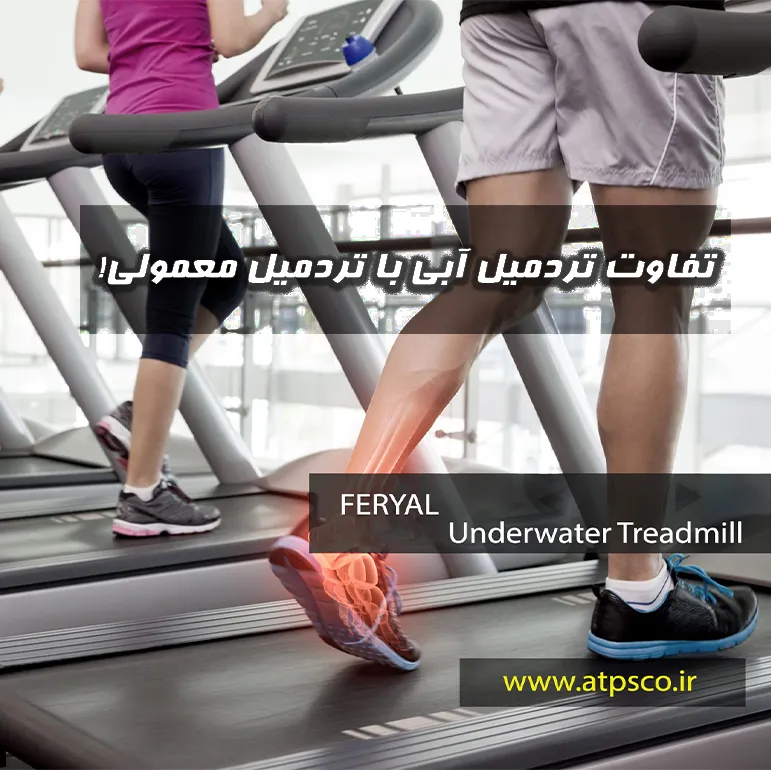
On a conventional treadmill, the body remains fully weight-bearing, meaning that the joints are exposed to the normal mechanical loads associated with walking or running. This can make traditional treadmill exercise less suitable for some people with joint injuries or certain musculoskeletal conditions.
The degree of buoyancy and joint unloading depends on the depth of the water. As water depth increases, a greater proportion of body weight is supported by the water, which can further reduce the load on the joints.
This combination of buoyancy, water resistance, and controlled movement is what makes Aqua Treadmill exercise particularly valuable for low-impact fitness, rehabilitation, and hydrotherapy programs.

The hydrostatic pressure of water applies relatively uniform pressure around the body, which can influence circulation and cardiovascular responses during immersion. This property makes aquatic exercise particularly useful for controlled exercise programs, although people with cardiovascular conditions should always exercise under appropriate medical guidance.
Water immersion can also provide a supportive environment for pregnant women, including during certain prenatal exercise programs. However, any aquatic exercise during pregnancy should be performed with approval and supervision from a qualified healthcare professional.
Another interesting property of water is its molecular cohesion and resistance to movement. These characteristics create a stable environment for people with balance difficulties and certain neurological conditions, including multiple sclerosis (MS) and Parkinson’s disease. In an appropriately supervised aquatic exercise program, the support and resistance provided by water can help individuals practice walking and movement while reducing the risk associated with losing balance, while also working to strengthen their muscles.
According to medical and rehabilitation professionals, the therapeutic applications of Aqua Treadmills can be extensive when different exercises are appropriately designed for each individual’s condition. However, these are not the only benefits of Aqua Treadmill training.
Aqua Treadmill exercise can increase workout intensity and energy expenditure compared with conventional walking, depending on factors such as water depth, treadmill speed, water resistance, and exercise intensity. This can make Aqua Treadmills a useful tool for weight management and fitness programs.
Professional athletes can also use Aqua Treadmills for endurance training and recovery sessions while reducing the impact placed on their joints. The controlled aquatic environment allows athletes to perform challenging workouts with less mechanical loading than many comparable land-based exercises.
By training in water, athletes can work toward their competition goals with reduced joint impact while maintaining an effective training stimulus.
In addition to all of these benefits, water can create a calming and relaxing exercise environment. The combination of warm water, controlled movement, and the surrounding aquatic environment may help reduce feelings of stress and promote relaxation and overall well-being.


